
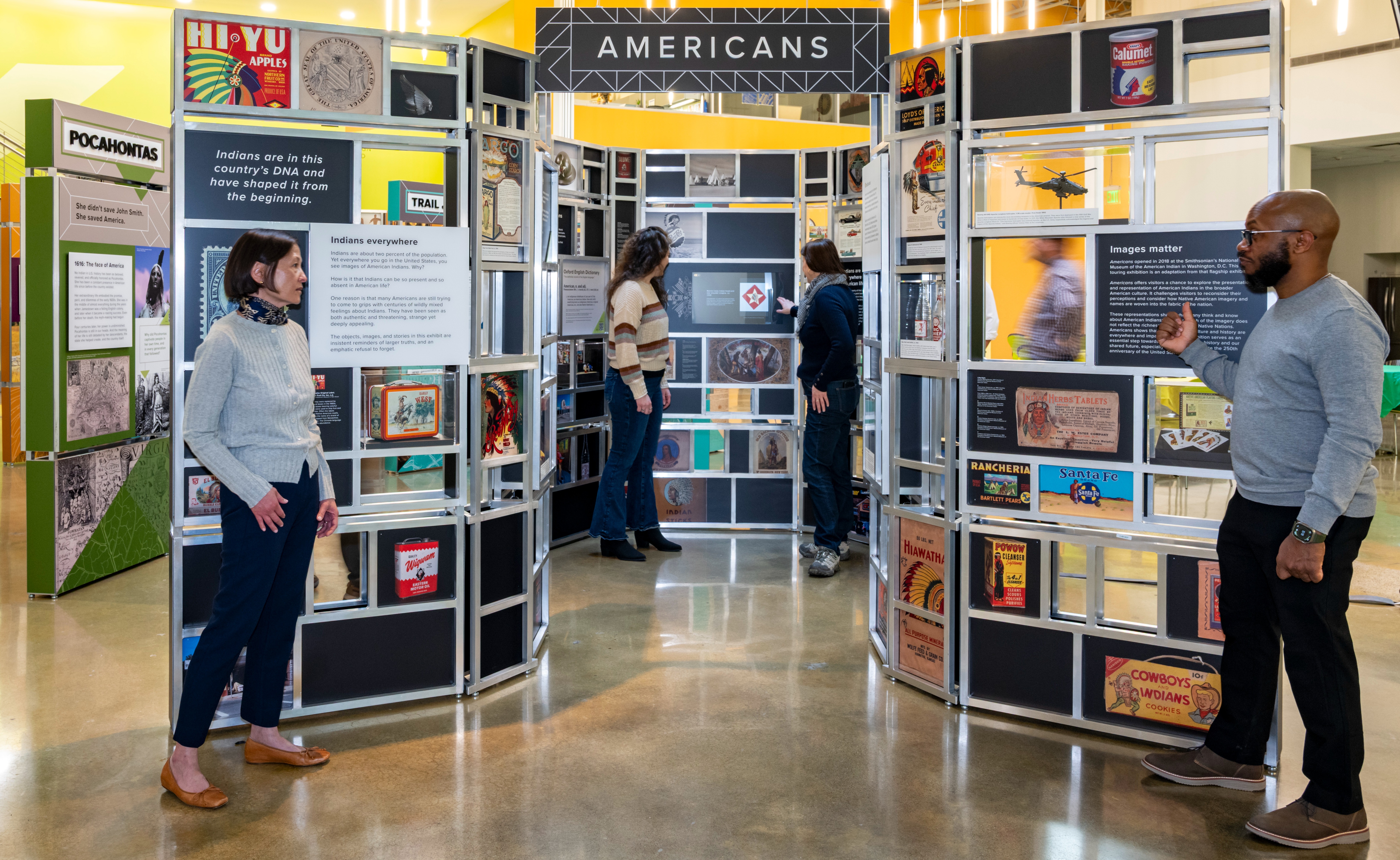
Americans is a fascinating and thought-provoking Smithsonian traveling exhibit that explores how deeply intertwined Native Americans are in the history, popular culture, and identity of the United States. And you can see it soon in Alabama! Scroll down to learn more...
Read our exhibit guideAs part of our America at 250 commemorations, AHA has brought a new Smithsonian traveling exhibit to Alabama. From September 2026 through June 2027, Americans will travel from Atmore to Wetumpka, Florence, Scottsboro, and Foley, all sites rich in Native history, culture, and the contemporary presence of local tribes.
Developed by the Smithsonian’s National Museum of the American Indian, Americans is a fascinating and thought-provoking exploration of how deeply intertwined Native Americans are in the history, popular culture, and identity of the United States. The exhibit also challenges viewers to consider anew four of the best-known Native stories that intersect with U.S. history: Thanksgiving, Pocahontas, the Trail of Tears, and the Battle of Little Bighorn.
Throughout the exhibit’s Alabama tour, our local host partners will complement the exhibit’s national perspective, presenting local talks, displays, artwork, and other offerings that highlights the history and present-day impact of Alabama’s indigenous communities. AHA will also offer local info sessions at each stop to share about statewide grants and public programming available year-round.
Our thanks to the Poarch Band of Creek Indians for their presenting sponsorship of Americans in Alabama.


Read all about it: We are all Americans
 Atmore: September 16 – November 4, 2026
Wetumpka: November 16 – December 18, 2026
Florence: January 11 – February 22, 2027
Scottsboro: March 4 – April 22, 2027
Foley: April 30 – June 25, 2027
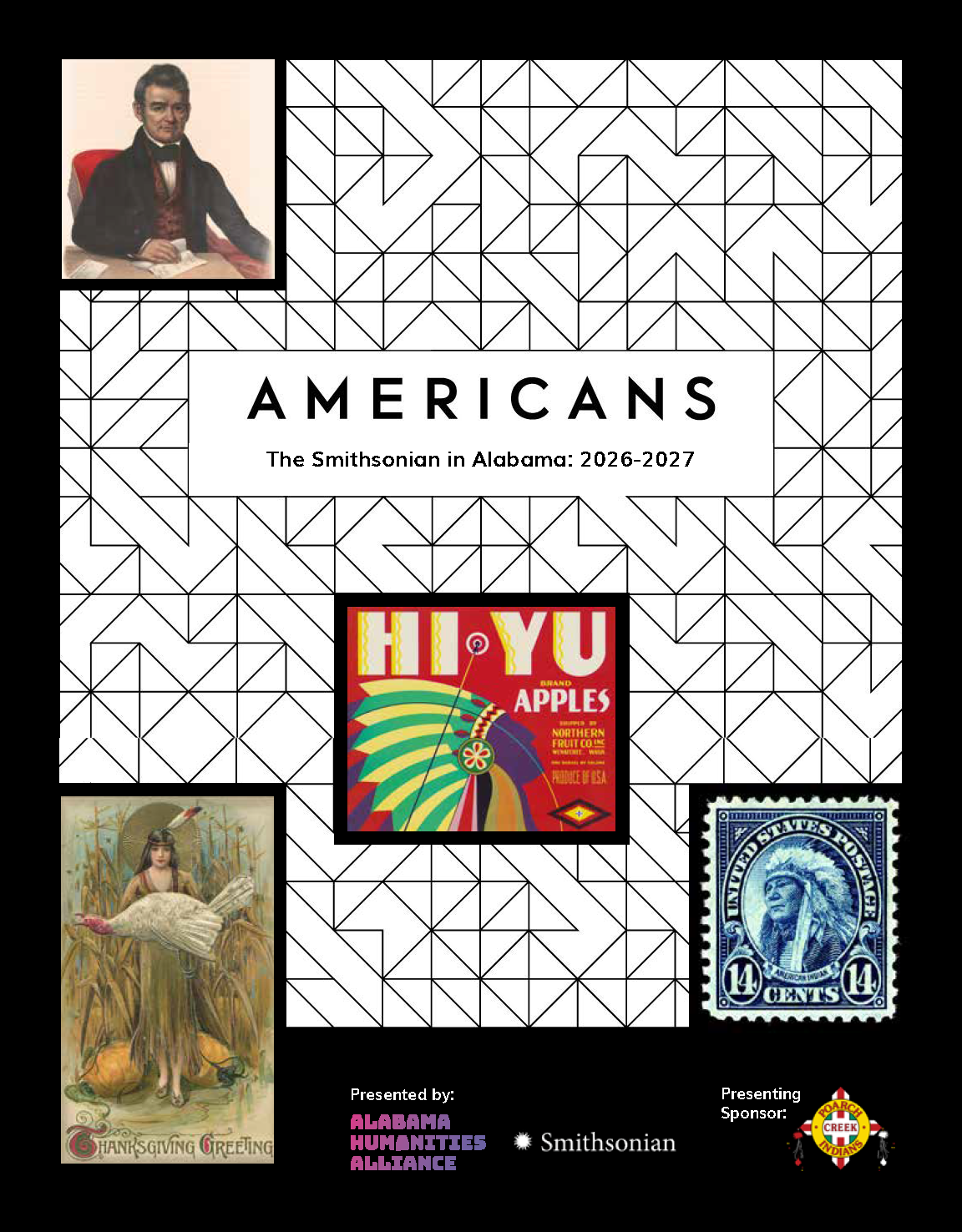
Learn more about the Americans exhibit and learn about local programming you’ll find alongside it in Atmore, Wetumpka, Florence, Scottsboro, and Foley.
Read the tour guide
What does the Americans exhibit mean to us here in Alabama? Read this insightful essay from Philip Carr, Ph.D., an archaelogist and professor at the University of South Alabama.
Read the essay