As Alabama’s students and teachers return to school this month, they’ve got some dynamic new resources and funding available to them from the Alabama Humanities Alliance.
Among the highlights: A new year of Alabama History Day that all schools and districts can incorporate; $2,000 teacher scholarships to support history- and civics-focused professional development opportunties and classroom projects for K-8 educators; and, as ever, a robust Encyclopedia of Alabama offering rich resources for teacher and student research projects.
Alabama History Day 2027
AHA offers Alabama History Day each year as a dynamic project-based learning tool for the classroom and as a chance for students to compete in school, regional, and state contests. For the 2026-2027 school year, the competition’s theme is “Innovation in History: Impact, Influence, Change.”
Teachers statewide are encouraged to incororpate Alabama History Day into their classroom curricuum, and AHA regularly offers workshops to help educators do just that. The experience gives students the chance to become confident and curious learners, as they conduct primary research and engage with history in new and creative ways. Students pick their own topics within the year’s theme and get to present their research creatively as exhibits, documentaries, papers, websites, or dramatic performances.
Alabama History Day is open to all public, private, and home schools. Students compete in teams or individually, with two divisions available for middle schools and high schools. And all have the chance to advance to regional and state contests. After a thrilling “America at 250”-themed Alabama History Day hosted at American Village in 2026, we’re grateful that this year’s state contest will return to Troy University in Montgomery.
Alabama History Day is made possible thanks to generous funding from the state of Alabama, with additional support from local donors around the state and the partnership of National History Day.
Jenice Riley Memorial Scholarships
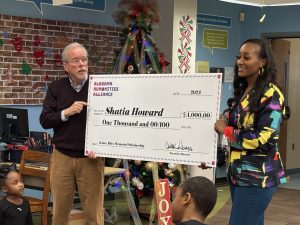
AHA also annually offers teacher scholarships that support K-8 Alabama educators who excel at helping students engage with history and civics. These competitive scholarships award $2,000, which can be used to fund creative classroom projects or support teachers’ professional development opportunities. The scholarship is open to all K-8 educators in public, private, or home schools.
The Riley Scholarships honor the late Jenice Riley, an extraordinary teacher who was the daughter of former Gov. Bob Riley and former First Lady Patsy Riley. Since 2003, these scholarships have awarded more than $114,000 in funding to 112 teachers statewide.
Riley Scholarship proposals should address how funds would be used to enhance teaching and learning about innovation. This year’s theme is inspired by the theme of AHA’s 2027 Alabama History Day competition, “Innovation in History: Influence, Impact, Change.” Not to be confused with invention, innovation is about new ways of seeing, imagining, improving, and organizing society and is key to our state’s (and nation’s) civic life and health.
Applications are now open for this year’s Riley Scholarships.
Encyclopedia of Alabama
The Encyclopedia of Alabama is a free, online resource that covers all things Alabama. Developed by Alabama Humanities and Auburn University — in partnership with many other insitutions and organizations across the state — the EOA enlists scholars to present trustworthy and authoritative information on Alabama’s history, people, culture, land, and more.
Students often use the EOA to help them choose their Alabama History Day projects and supplement their primary research. Teachers often use the EOA to support their classroom instruction and generate creative class projects.
The Encyclopedia of Alabama offers easy searching tools, including curated collections, topics by categories, and photo galleries. In 2026, the EOA also developed a special collection of resources related to “Alabama and America’s 250th Birthday.”
About the Alabama Humanities Alliance
Founded in 1974, the nonprofit and nonpartisan Alabama Humanities Alliance has served as a state affiliate of the National Endowment for the Humanities. AHA promotes impactful storytelling, lifelong learning, and civic engagement. Through our programs and grantmaking, we provide Alabamians with opportunities to connect with each other, with our shared history, and with the vibrant and complex communities we call home. Learn more at alabamahumanities.org.
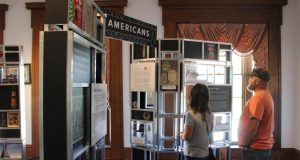
 Alabama Humanities remains committed to its Semiquincentennial commemorations, but
  Applications are now being accepted for AHA’s 2026 Jenice Riley Memorial Scholarships. Alabama educators are encouraged to

 On August 25, nearly 60 people arrived early to Red Mountain Theatre, to participate in
  Kurt Gray is an award-winning researcher and expert in how to study people’s deepest beliefs and why they matter. He’s the Weary Foundation Endowed Chair in the Social Psychology of Polarization and Misinformation, at Ohio State University. Gray also directs the Deepest Beliefs Lab and the Center for the Science of Moral Understanding at the University of North Carolina, Chapel Hill.
 “The Comer Museum had such a clear vision for hosting this exhibit,” says Laura Anderson, director of partnerships and outcomes for the Alabama Humanities Alliance. “They have gathered Sylacauga-area residents around the notion that innovation is at the heart of their community’s shared future — not imagining whether they will encourage innovation, but in how many ways.”
 SYLACAUGA: THROUGH JULY 19, 2025
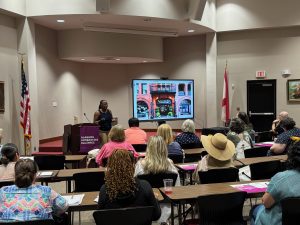 AHA also offered a
  Today, the former Avondale Mills site is transforming into the home of the East Alabama Rural Innovation and Training Hub (EARTH). This transformative and innovative workforce development program, physically rooted in the town’s rich history, will help East Alabamians prepare for careers and industries that might not even exist yet.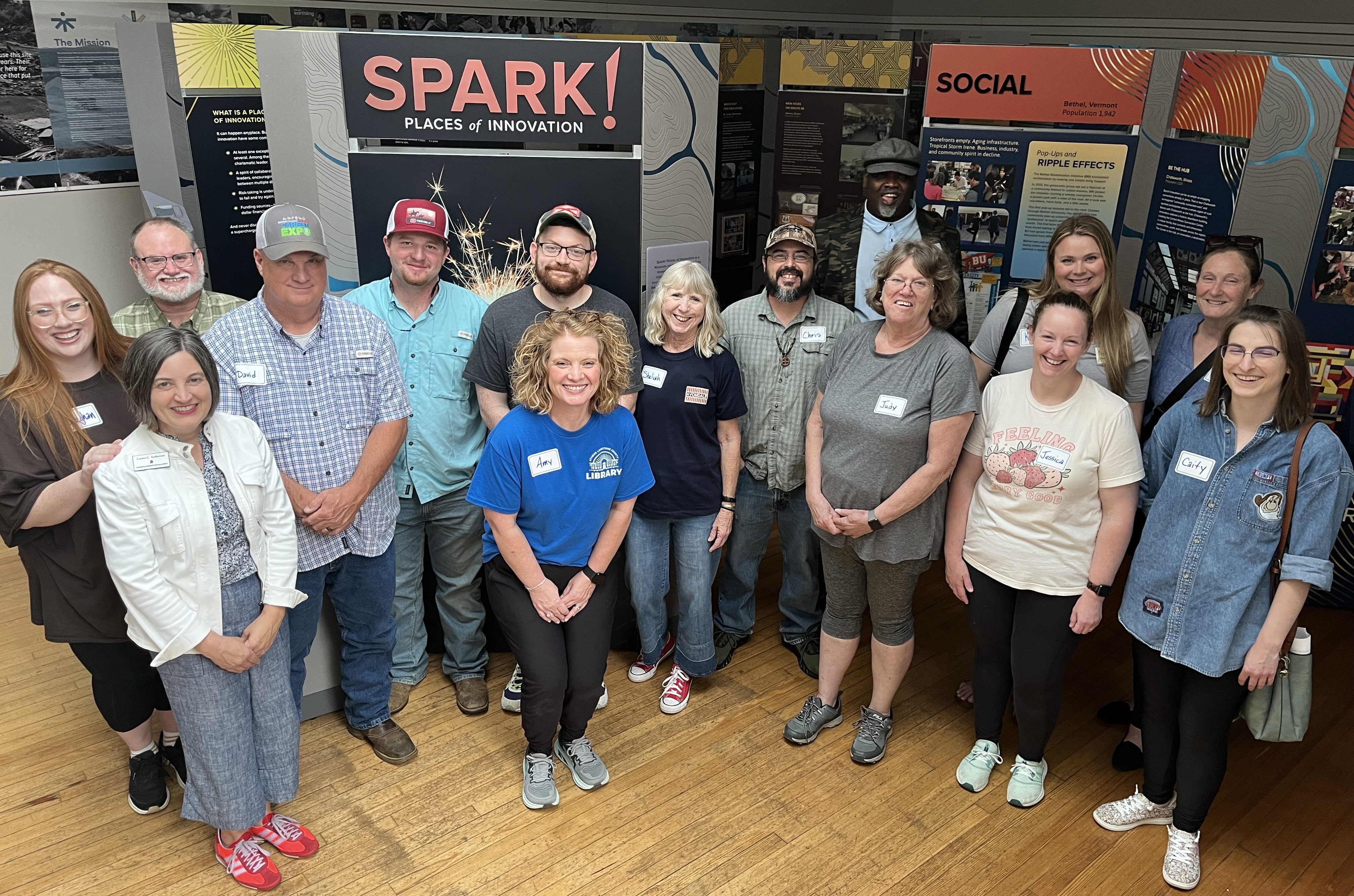

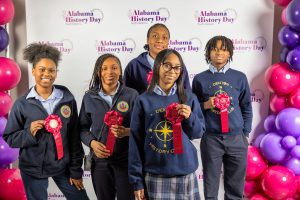 Matt Spivey is the academic supervisor for social studies at Mobile County Public Schools, and a partner in organizing the South Alabama regional. He noted that the History Day program has obvious immediate impacts in terms of helping students build critical thinking skills, and in vetting and analyzing sources — “and in all those elements that will benefit our students in their classes, in those high-stakes tests that we use to measure their progress.”